
Night Firing Training with Thermal Sights
A practical guide for instructors and range planners: why thermal sights need a reliable heat signature, how passive and actively heated targets differ, and how to plan effective night live-fire sessions.
Request a Quote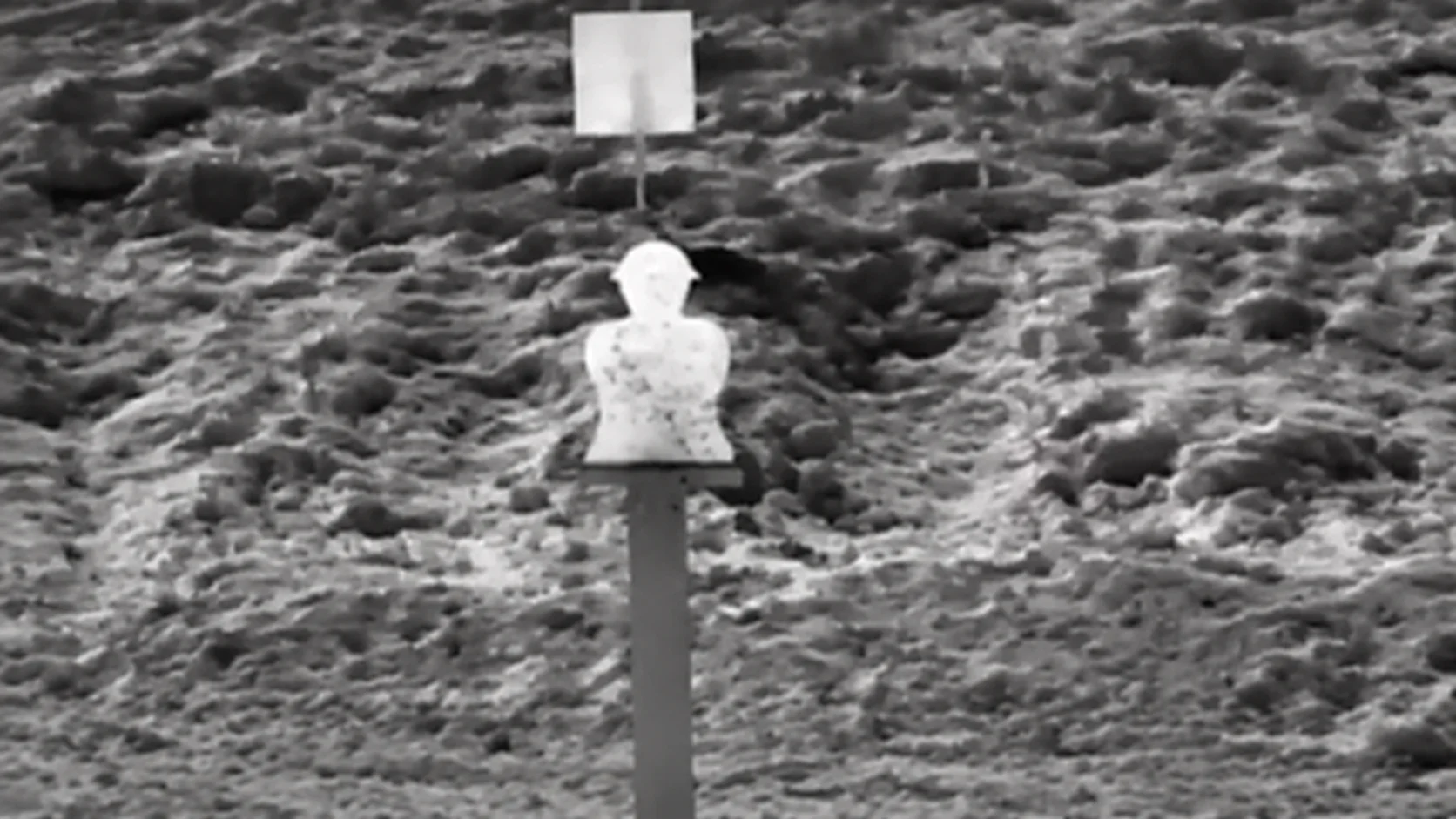
How a Thermal Sight Sees a Target
A thermal sight does not need light; it shows temperature differences. The shooter sees the target only when it is clearly warmer or colder than the background. A target with a stable heat signature therefore stays visible in darkness, smoke or light fog.
For realistic night training, a night firing target should look like a person through the sight: a warm silhouette that stays consistent from the first shooter to the last. That is the job of a thermal sight training target.
- Heat contrast, not light, makes the target visible
- Consistent signature for every shooter
- Works in darkness, smoke and light fog
- Human-shaped silhouettes for realism
Passive vs. Actively Heated Targets
Two approaches to giving a target a heat signature.
- Passive targets
- Their heat contrast depends on sun, wind, air temperature and time of day. Visibility can change during a session and differ from one night to the next.
- Actively heated targets
- The heat is generated on the target and adjusted by the instructor. The signature can be kept consistent as conditions change during the night.
- AYZET thermal target
- A remote-controlled target system: heating is adjusted by remote control, and one remote control manages 10 targets. See the thermal target system.
Planning a Night Live-Fire Session
Prepare in daylight
Position the targets, check the range layout and safety limits, and complete pre-use checks before dark.
Set the heat signature
Switch heating on before the session and confirm through a thermal sight that every target is clearly visible.
Run and score
Follow hits on the control case in real time and review results with each shooter after firing.
AYZET in Night Firing
AYZET thermal targets are used in day and night live-fire training by military training units. Hits are shown on the control case with audible, light and numeric counter indication, and a light signal on the target confirms each hit.
Press play to watch the system in use during night firing.
Frequently Asked Questions
Planning night training? We can help you choose the right target layout.
Request a QuoteWhy do thermal sights need a heated target?
A thermal sight shows differences in heat, not light. A target that is the same temperature as its background is hard to see, so a stable heat signature on the target plate is what makes it visible through the sight.
What is the difference between passive and actively heated targets?
A passive target depends on weather and ambient conditions for its heat contrast. An actively heated target, such as the AYZET thermal target, lets the instructor adjust the heat by remote control so the target stays visible as conditions change.
Can night training also be done in daylight?
Yes. The AYZET thermal target is used for day and night live-fire training, so the same targets can serve both daytime and night-time sessions.
How are hits scored at night?
Hits are shown on the control case with audible, light and numeric counter indication, and a light signal on the target confirms each hit, so scoring does not depend on walking downrange in the dark.
Equip Your Range for Night Training
Tell us about your range and training needs, and we will propose a thermal target configuration.
Request a Quote